Knowledge Centre
How to Inject Peptides
The simple subcutaneous method, start to finish.
Subcutaneous injection is the standard, comfortable way to administer most research peptides. This beginner guide walks through drawing your dose, injecting at the right angle, and rotating sites — assuming your vial is already reconstituted.
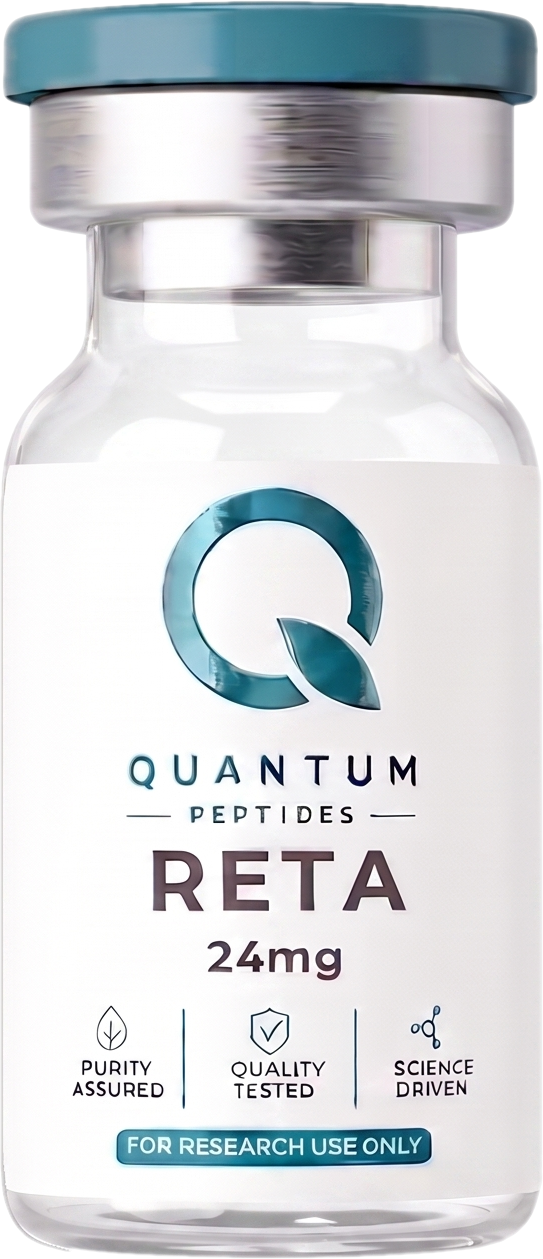
There are two routes for injecting peptides: subcutaneous (SubQ), into the fat layer just beneath the skin, and intramuscular (IM), deeper into muscle. For the vast majority of research peptides, SubQ is easier, more comfortable, and entirely sufficient.
IM injections use longer needles, absorb faster, and are more prone to bruising and irritation — and they are rarely necessary for peptides. This guide focuses entirely on the SubQ method.
- Your reconstituted peptide vial
- A 1 mL insulin syringe (31G, 6 mm or 8 mm is comfortable)
- Alcohol swabs
- A sharps container
- Bring the vial to room temperature. Take it out 5–10 minutes early or warm it briefly in your palm — cold liquid stings more.
- Sanitise the stopper with an alcohol swab and let it dry.
- Invert the vial so the stopper faces down; a slight tilt toward you is fine.
- Pull air into the syringe equal to your intended dose, insert into the centre of the stopper, and push that air in. Equalising the pressure makes drawing much easier.
- Draw your dose slowly to the correct marker. The solution often slow-drips in — be patient. Overshot? Push the excess back and re-draw to the mark.
- Pinch the skin at your chosen site to lift the fat layer.
- Insert at 45°, bevel up, and push the plunger in slowly until empty.
- Withdraw at the same angle, cap the needle, and place it in your sharps container.
SubQ injections need a layer of fat. The three common sites are:
- Abdomen — the most popular site; stay at least two inches from the navel.
- Upper outer thigh — the fleshy area roughly halfway between hip and knee.
- Back of the upper arm — works well with a helper or if you are flexible.
Always rotate your sites
- Never inject the same exact spot twice in a row.
- Cycle between abdomen, thigh, and arm — or leave at least a 1-inch gap.
- A simple method is the “clock-face” rotation around the navel: 12, 3, 6, then 9 o’clock.
Rotating prevents scar-tissue build-up and keeps absorption consistent.
Does a SubQ injection hurt?
Done correctly, barely. With a quality 31G insulin needle inserted at 45° with the bevel up, most people feel little to nothing. If you have ever had blood drawn, this is not close to that.
Do I need to swab my skin first?
It will not hurt, but for a clean SubQ injection it is not strictly necessary unless the skin is visibly dirty. If you do swab, let the alcohol dry fully — injecting through wet alcohol drives it under the skin and stings more.
There is a tiny air bubble in my syringe.
For SubQ, a small bubble is harmless. Tap it to the top and push it back into the vial if it bothers you. Air bubbles only matter for large IV injections, which this is not.
I drew blood when inserting the needle.
If blood enters the syringe before you inject, withdraw, switch to a fresh syringe, and pick a new site at least an inch away. It happens occasionally and is not a problem.
Can I reuse an insulin syringe?
No. One needle, one use. Insulin needles dull after a single pass and reuse increases discomfort and contamination risk.