Knowledge Centre
Retatrutide vs Tirzepatide
Triple agonist vs dual agonist, compared.
They are the two most talked-about metabolic peptides — but they are not the same molecule. Here is an honest, research-grounded comparison of how they work, what the data shows, and how they differ in practice.
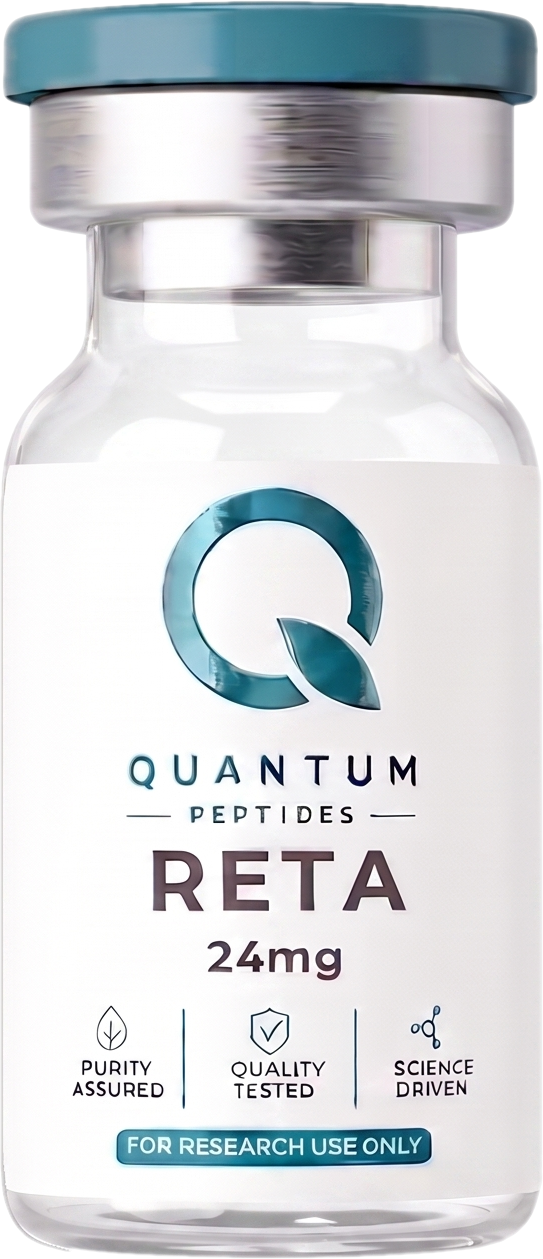
Both compounds belong to the incretin family, but they act on a different number of receptors — and that is the headline difference.
- Tirzepatide activates two receptors: GLP-1 and GIP. Together these blunt appetite, slow gastric emptying, and improve how the body handles glucose.
- Retatrutide activates those same two plus glucagon. The glucagon arm is studied for raising energy expenditure and supporting liver-fat reduction, which is why it is described as a triple agonist.
In plain terms: tirzepatide works mainly on the “input” side (appetite and glucose), while retatrutide adds an “output” lever (energy burn) on top.
Head-to-head trials between the two do not yet exist, so comparisons come from separate studies with different designs — read them as directional, not definitive.
Tirzepatide’s large Phase 3 weight-management programme reported average reductions in the low-twenties percent at the highest doses over about 72 weeks. Retatrutide’s earlier-stage data pointed to roughly a quarter of body weight at its top dose — an eye-catching figure, but from a smaller, earlier trial that still needs full Phase 3 confirmation.
Because they share the GLP-1/GIP mechanism, the two have a similar side-effect profile, dominated by gastrointestinal effects — nausea, reduced appetite, and occasional diarrhoea or constipation, usually heaviest right after a dose increase.
Retatrutide’s glucagon component can nudge heart rate and, transiently, glucose — another reason careful, gradual titration matters and why it remains an active area of research.
A practical handling note: Retatrutide must be reconstituted with plain bacteriostatic water, never saline — sodium chloride makes it precipitate out of solution. Tirzepatide does not share this quirk. See our reconstitution guide for the full method.
On maturity: tirzepatide is the more established molecule with a longer track record and regulatory approval in several markets. Retatrutide is newer and, at the time of writing, still moving through late-stage trials — promising, but earlier in its journey.
Which one is “better”?
- For a longer evidence base and proven results, tirzepatide leads today.
- For the highest weight-reduction numbers seen so far, retatrutide’s triple mechanism is the standout — pending Phase 3 confirmation.
- Both demand the same discipline: slow titration, consistent timing, and careful handling.